
Identity-Related Campus Support Services
Multicultural Center for Academic Excellence (MCAE)
Appleby Hall,
Room 140
[email protected]
mcae.umn.edu
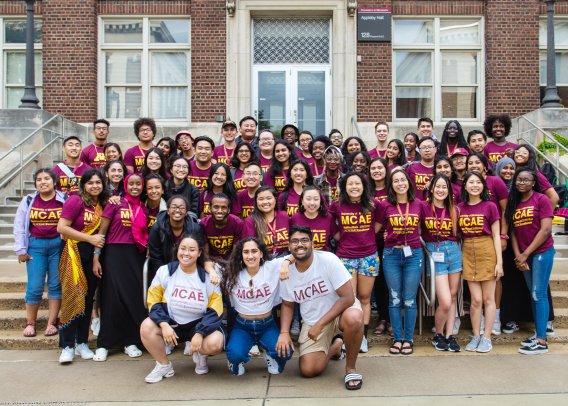
The Multicultural Center for Academic Excellence aims to provide resources to empower students to thrive academically and personally by fostering persistence, achievement, self-efficacy, and a deep sense of belonging. Through signature events, workshops, one on one coaching, tutoring, and Living Learning Communities (LLCs), MCAE provides resources to all University students, while considering the needs of first-generation students, students of color, and Indigenous students. MCAE creates spaces, services, and programs that prioritize powerful, caring human connections while cultivating community on campus. Within MCAE, all students will find a welcoming and affirming environment.
Circle of Indigenous Nations
Appleby Hall,
Room 322
[email protected]
coin.umn.edu
The Circle of Indigenous Nations (COIN) is a student support office that advances and advocates for the needs of American Indian/Native American, Alaska Native, and First Nations students at the University of Minnesota Twin Cities. COIN offers a range of specialized services, programs, events, and resources to assist students throughout their journey at the University. COIN also creates and maintains a welcoming on-campus space where Native and global Indigenous students are able to build relations with each other through shared interests, cultural values/traditions, and hxstorical experiences.
TRIO McNair Scholar Program
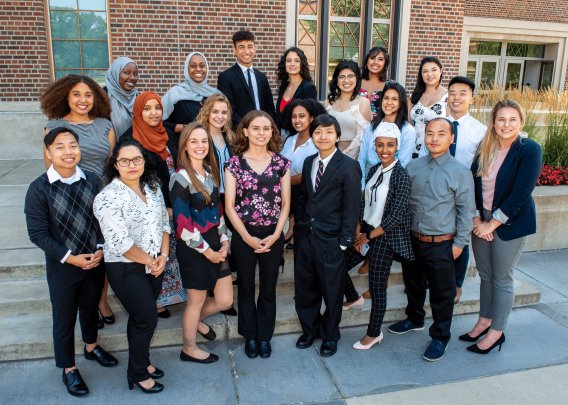
McNair Scholars develop higher-level academic and research skills necessary to gain admission to and successfully complete graduate study.
- Open to all Twin Cities students
- 10-week summer research apprenticeships with a University faculty mentor whose research interests match those of the McNair student
- $3,000 summer stipend, additional $500 during the academic year
- Weekly seminars on study strategies for graduate school and graduate entrance exam preparation
- Year-round seminars and advising services
Living Learning Communities
The following University of Minnesota Living Learning Communities are open to all students:
- American Indian Cultural House
- Casa Sol
- Huntley House
- Charlotte's Home
- Lavender House
- Community of Diverse Engineers and Scientists (CODES) LLC *formerly known as the STEM Diversity House
- Tsev Hmoob
- The Firsts
Find more information about Living Learning Communities.
Disability Resource Center
McNamara Alumni Center,
Room 180
612-626-1333
[email protected]
disability.umn.edu
The Disability Resource Center (DRC) promotes access and equity for all students, faculty, staff, and guests of the University of Minnesota.
The DRC serves students with an array of disabilities and health conditions, including those related to chronic and mental health. Students with disabilities may request accommodations to address barriers they anticipate or are presently experiencing through the DRC. We can assist in exploring accommodations in a variety of contexts, including coursework, lab work, on-campus housing, campus jobs, and study abroad.
We provide:
- Learning and working accommodations
- Education and training
- Consultation
- Technical assistance
- Career information
Gender and Sexuality Center for Queer and Trans Life
Appleby Hall,
Room 40
612-625-0537
[email protected]
gsc.umn.edu
The Gender and Sexuality Center (GSC) is the University of Minnesota Twin Cities’ LGBTQIA+ resource center. We collaborate with University partners to develop and support more expansive understandings of gender and sexuality through education, advocacy, outreach and support. The GSC promotes the holistic academic, personal, and professional success of LGBTQIA+ University of Minnesota students, employees, alum, and allies. Our office works to ensure students are connected to holistic support and communities of care, from their first semester to post-graduation experience.
We aspire to be unrelenting visionary advocates in cultivating, shifting, and enriching the LGBTQIA+ campus climate for our Queer and Trans University community members.
Aurora Center for Advocacy and Education
Appleby Hall,
Room 340
24-hour helpline:
612-626-9111
Business hour textline:
612-615-8911
[email protected]
aurora.umn.edu
At the Aurora Center, we provide free and confidential services for students, faculty, and staff who are victims, survivors, concerned people of sexual assault, relationship violence, stalking, and sexual harassment.
Our mission:
- Deliver free and confidential services
- Build partnerships with departments on campus
- Create awareness and prevention strategies around sexual assault, relationship violence, stalking, sexual harassment, and oppression
- Provide meaningful volunteer and leadership opportunities
We also provide:
- Drop-ins and appointments
- Prevention education
- Training programs on various topics, including gender equity and bystander intervention
Student Counseling Services
612-624-3323
counseling.umn.edu
Minneapolis:
Boynton Health,
4th floor
Walk-in hours available
St. Paul:
Coffey Hall,
Room 199
We offer individual and group counseling on academic, personal, and career issues.
- Free
- Confidential
- No appointment needed—first come, first served
Attend academic success workshops, where you can get tips for time management, note-taking, anti-procrastination, test-taking, and more!
Let's Talk
Let's Talk Counseling
- Informal drop-in session around campus
- It’s a good fit for you if…
- you are unsure about counseling and wonder what it’s like
- you are not interested in ongoing counseling but want a counselor’s perspective
- you have a specific problem and want someone to talk it through
- you are concerned about a friend and want some thoughts about what to do
Mental Health Collective of Indigenous People and People of Color
- The Twin Cities campus sits on the traditional homelands of the Dakota People—and our group strives to build bridges and create solidarity.
- Open to undergraduate and graduate students, staff, and faculty who self-identify as Indigenous People and/or People of Color at the University. We meet on the first Wednesday of each month:
- Bruininks Hall, Room 420B Noon-1:30 p.m.
Tutoring & Academic Success Center
Appleby Hall Room 340, Walter Library Room 204, Wilson Library Basement, Magrath Library Room 75, Bruininks Hall Room 511
[email protected]
tasc.umn.edu
The Tutoring & Academic Success Center (TASC) provides a variety of services that support student academic development. Our services support students as they practice skills and habits for academic success, learn with and from their peers, and reflect on their ongoing development as scholars. Through partnerships with faculty and staff, our work promotes a culture that responds to students’ needs and affirms each student’s ability to achieve their goals.
This mission is achieved through
- Peer-led services to help students learn from and with other students
- One-to-one academic success coaching to prepare lifelong learners for our multicultural world
- Credit coursework created to develop academic and life-long learning skills
- Partnerships with faculty and staff to develop and support success initiatives and programs
- Accessible online resources for students, staff, and faculty
- Creating data-informed programs, initiatives, and interventions to support student growth & development
International Student and Scholar Services (ISSS)
Hubert H. Humphrey School,
Room 190
612-626-7100
[email protected]
isss.umn.edu
We’re dedicated to serving the University of Minnesota’s international community.
ISSS supports the University’s internationalization efforts by helping departments bring new foreign nationals into the community; by providing intercultural training for students, staff, and faculty; and by offering events that build links between the U.S. and international communities on campus.
Walk-in advising is available.
Our advisers/counselors are trained to provide:
- Information about non-immigrant visa issues for students and scholars holding F, J, H, and O visas
- Counseling to students about academic, personal, and family matters
- Counseling for students on issues of crosscultural adjustment and professional integration upon returning home
DACA and Dream Act Information
“Our diversity is among the many things that make us strong. All are welcome here and we support you.”
—University of Minnesota Statement of support for non-citizen U of M community members, November 30, 2016
How do Minnesota Dream Act and/or qualifying DACA students apply for benefits?
Undocumented students can apply for state financial aid by accessing the online application: Minnesota Alternative State Financial Aid Application.
To be eligible for the Minnesota State Grant, the application must be submitted no later than the 30th day of the term. The results of the application can also be used to qualify for in-state tuition rates at the University of Minnesota Twin Cities and Duluth campuses.
The application should be submitted once for each academic year the student is enrolled in college.
Immigration Response Team
1901 University Avenue SE,
Suite 300
612-624-4224
[email protected]
immigration.umn.edu
The Immigration Response Team ensures that all students, faculty, and staff who are affected by immigration policy changes—including issues connected with DACA and immigration status— have access to resources and support.
- Free
- Private
- Drop-in sessions available
- Legal help—meet an immigration lawyer
- Updates on immigration policies
Student Legal Services
West Bank Skyway,
Room 160
612-624-1001
[email protected]
sls.umn.edu
Student Legal Service offers legal advice and representation to Student Service Fee-paying University of Minnesota Twin Cities students. We also provide educational programming on legal issues to students, staff, faculty, and the community.
- Free*
- By appointment only
- Notary services
- Immigration services
- Landlord/Tenant legal help
- Educational programs on legal issues
Our office has seven full-time attorneys, two paralegals, two support staff, and two law clerks. Because we are an office just for U of M students, we are able to focus our practice on the legal issues that are often unique to students.
* To students who have paid the University of Minnesota Student Services Fee
Asian Pacific American Resource Center
Appleby Hall,
Room 311
612-626-6512
[email protected]
aparc.umn.edu
The Asian Pacific American Resource Center (APARC) is a community committed to education and affirming Asian American and Pacific Islander identity, culture, and heritage. We center sense of belonging, growth, and empowerment for students to thrive during college and beyond. APARC is a space for all students, embracing community, diversity, and respect.
First-Generation Student Success Center
Appleby Hall,
Room 227
[email protected]
firstgen.umn.edu
Launched in Fall 2024, the First-Generation Student Success Center empowers first-generation undergraduate students as they navigate their college experience. We exist to bridge gaps in support, especially for those who may not yet be engaged in existing programs or services, and to create an inclusive environment where first-gen students feel seen, heard, and valued. We recognize the resilience, talents, and cultural wealth that first-gen students bring to the University of Minnesota Twin Cities and work to amplify those unique qualities through mentorship, leadership development, and intentional community-building.
Find your home in our student lounge! Head to 27 Appleby Hall for a cozy space to study, unwind, and build community, plus free snacks, printing, a kitchen, and campus resources to support you throughout the day.
The Women's Center
Appleby Hall,
Room 65
612-625-9837
[email protected]
womenscenter.umn.edu
The Women’s Center advances gender equity across identities. We educate and inspire feminist leaders, advance an empowering intellectual environment, and advocate for an equitable University culture and community.
The first campus-based women's center in the country, the University of Minnesota’s Women's Center was founded in 1960 as the Minnesota Plan for the Continuing Education of Women. The plan was created in order to address the needs of women whose education had been interrupted by marriage and motherhood. It became the first women’s center on a university campus and continues to serve as an example for college women’s centers across the country.