

Research Listing - College
Note: Faculty who are part of multiple departments and centers may appear more than once.
Displaying 1 - 10 of 1005
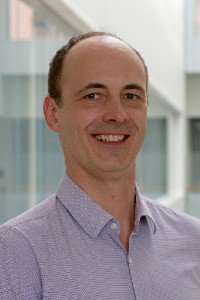
Physics
Distinguished McKnight University Professor, School of Physics and Astronomy
Complex oxides exhibit fascinating electronic and structural properties. These quantum materials are at the frontier of research in condensed matter physics since they provide myriad possibilities to discover and study novel fundamental phenomena and phases, including new kinds of magnetic and charge order, as well as unconventional superconductivity. Moreover, many complex oxides exhibit properties that have potential applications in technology.
Materials preparation is the heart of…
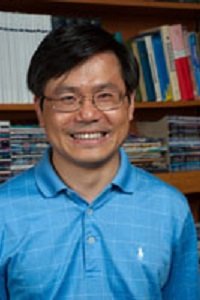
Physics
Professor, School of Physics and Astronomy
Our Solar System: What Triggered Its Formation?
About 4.6 billion years ago, some event disturbed a cloud of gas and dust, triggering the gravitational collapse that led to the formation of the solar system. One hypothesis is that a nearby supernova - a star exploding at the end of its life cycle - initiated this event. My collaborators and I have examined why earlier forensic evidence based on studies of extinct radioactive nuclei in meteorites have been inconclusive,…
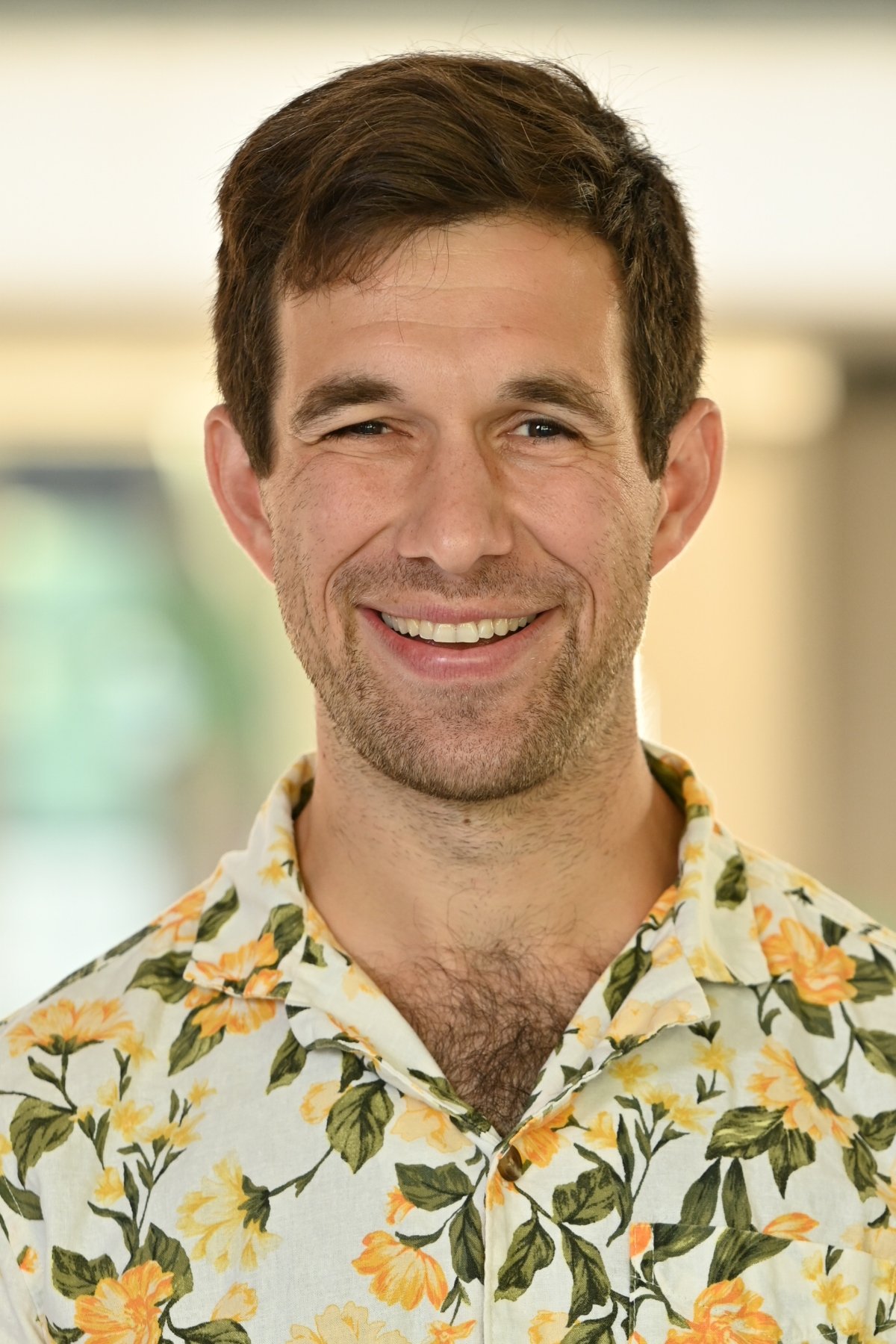
School of Mathematics
Associate Professor, School of Mathematics
Harmonic analysis, partial differential equations, geometric measure theory and the calculus of variations
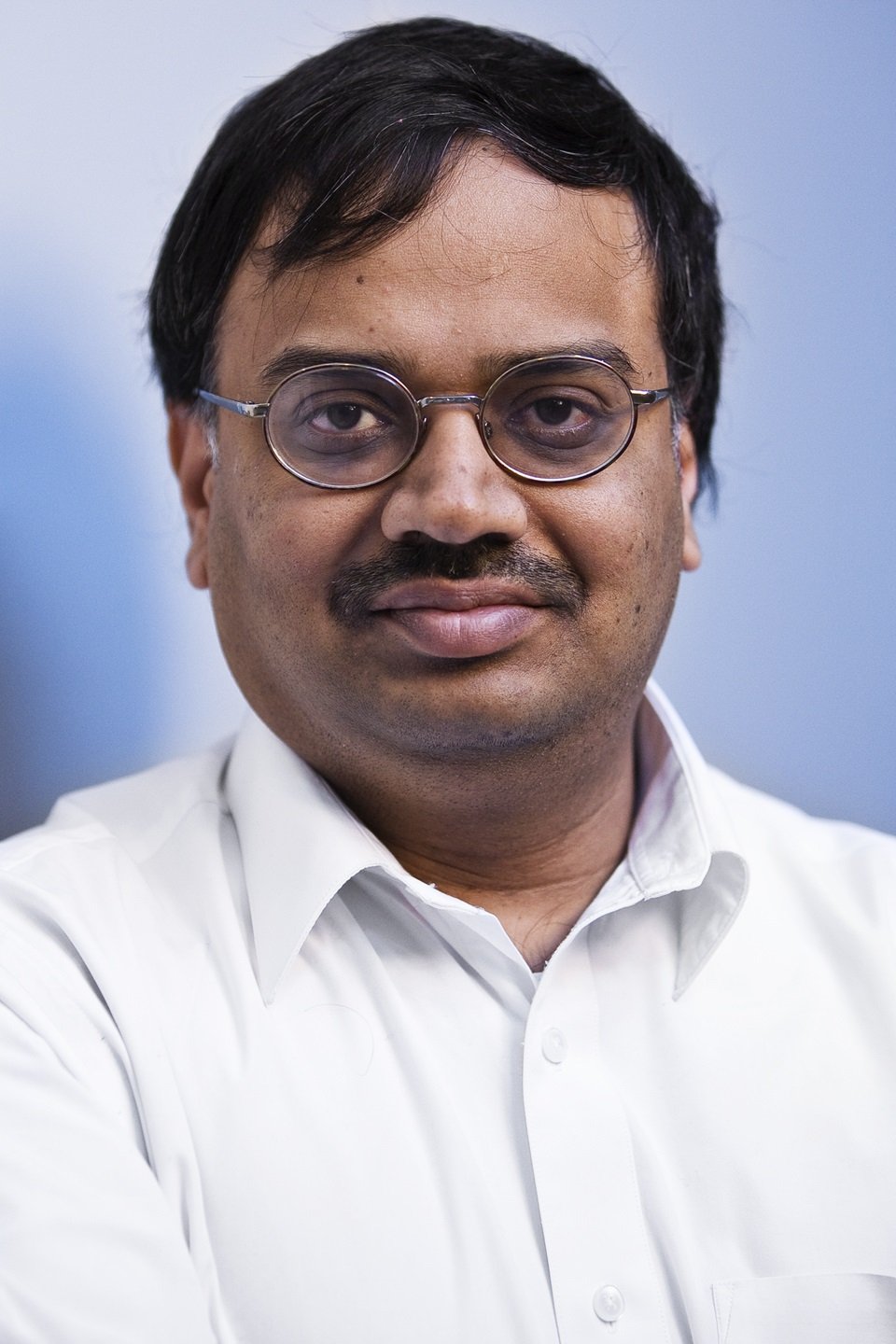
Department of Electrical and Computer Engineering
Professor; Director of Graduate Studies; Vincentine Hermes-Luh Chair
Salapaka Research Group Site
My research spans control theory and its applications to nano-interrogation and bio-manipulation at the molecular scale using laser tweezers and atomic force microscopes.
Physics
Associate Professor, School of Physics and Astronomy
I work on experimental collider experiments, in particular the CMS experiment at the Large Hadron Collider. My research has three main thrusts: - On the physics analysis front, I focus on searching for signs of new physics, beyond what is currently known and encapsulated in the Standard Model. My physics program is currently focused on signatures with many jets and low missing transverse momentum, inspired by models of R-parity violating and Stealth Supersymmetry - My group is also working…
Civil, Environmental, and Geo- Engineering
James L. Record Professor
Research interests revolve around the modeling and simulation of complex wave phenomena in unconventional structures and materials, with emphasis on cellular solids, phononic crystals and acoustic metamaterials. Current efforts are directed towards the investigation of wave motion in nonlinear periodic solids, such as granular crystals, with the objective of designing strategies for tunable filtering and wave steering. In parallel, new theoretical and experimental techniques for material…
Data Science
Professor, Distinguished McKnight University Professor, Distinguished University Teaching Professor, Associate Dean for Research, Department of Computer Science & Engineering
Konstan's work lies broadly in the field of human-computer interaction. Most of the work relates to recommender systems -- personalization software -- and how personalization algorithms can be improved to provide better user experience. He also works more broadly on social computing -- challenges in how technology supports (or fails to support) collaboration and on health applications of technology (particularly web and mobile behavioral interventions for…
Department of Computer Science and Engineering
Professor, Distinguished McKnight University Professor, Department Head
Loren Terveen's research areas are social computing, human-computer interaction, and intelligent systems. He focuses on issues including detecting and addressing bias in intelligent systems, methods for doing ethical research with online communities, and integrating intelligent systems into peer production systems like Wikipedia. He has expertise in user interface design in a variety of contexts including graphical user interfaces, mobile and location-aware systems, and web search and…
Data Science Initiative
Professor, Distinguished McKnight University Professor, Associate Department Head, Department of Computer Science & Engineering
Terveen's research areas are social computing, human-computer interaction, and intelligent systems. He focuses on issues including detecting and addressing bias in intelligent systems, methods for doing ethical research with online communities, and integrating intelligent systems into peer production systems like Wikipedia. He has expertise in user interface design in a variety of contexts including graphical user interfaces, mobile and location-aware systems, and web search and information…
School of Mathematics
Associate Professor Emeritus, School of Mathematics
Algebraic topology.