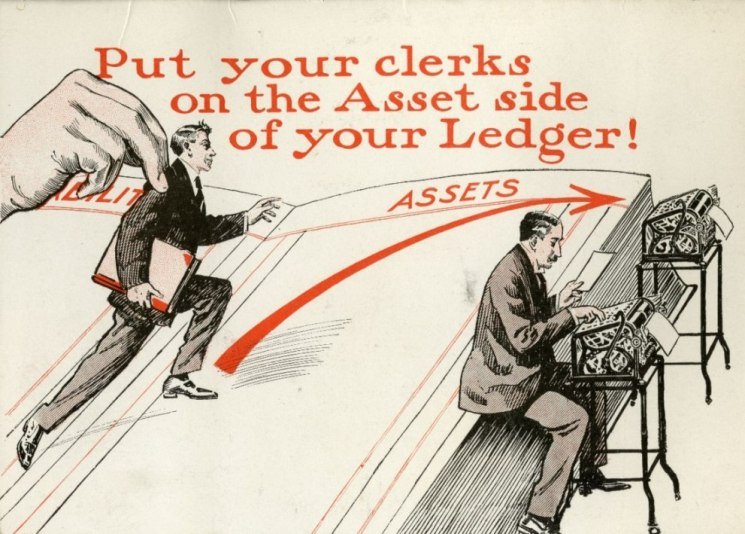
Inequities in the workplace have not, of course, been confined to the computing industry. Expectations and assumptions about the suitability of men and women for specific jobs have long colored how jobs have been marketed to potential employees. The Burroughs Corporation, which moved into the computing field in the early to mid 50s, started out manufacturing adding machines and other office equipment as well as providing training on the use of "modern" machinery. Because clerical jobs were significantly impacted by developments in computers it is illustrative to examine how these jobs were previously conceived and portrayed to potential employees as pre-computing advancements in technologies were introduced to the office.
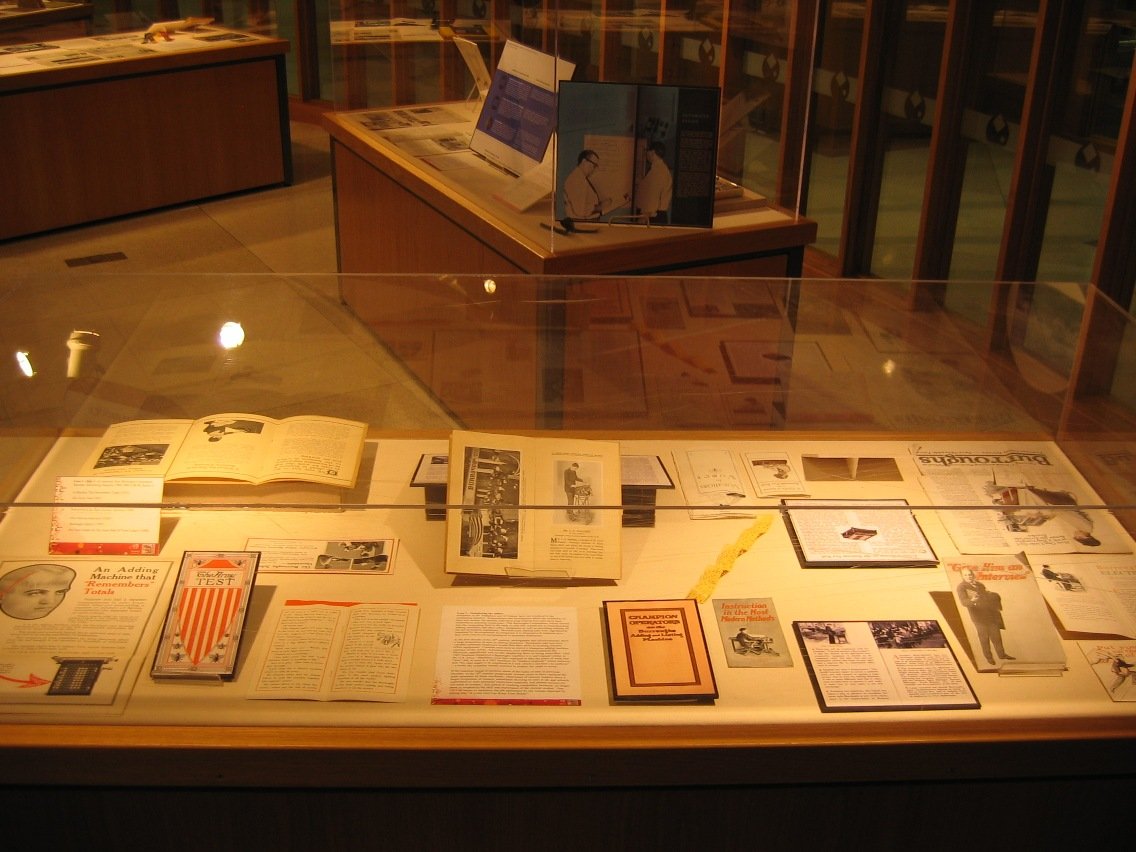
In the first decade of the 20th century, photographs and advertisements show a large proportion of men in clerical positions. Brochures told men how valuable potential employers would find their skills in working with modern office equipment. Contests were held to crown a champion adding machine operator of the world. Advertisements even anthropomorphized the machines, specifically and vividly displaying them as being masculine. One 1907 brochure compared a Burroughs machine to a well trained soldier in the U.S. Army. Machines were now expected to take the place of work that “men” did, as seen in a 1907 brochure on “modern methods” which instructs that “No man ought to be employed at a task which a machine can perform” – a motto the company would continue to employ for years to come.
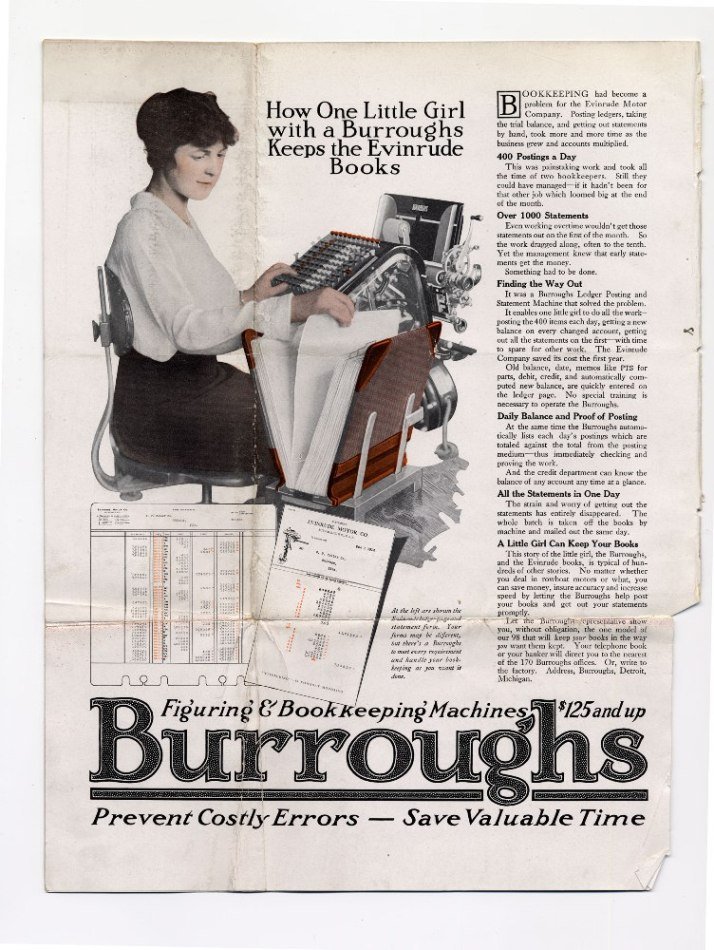
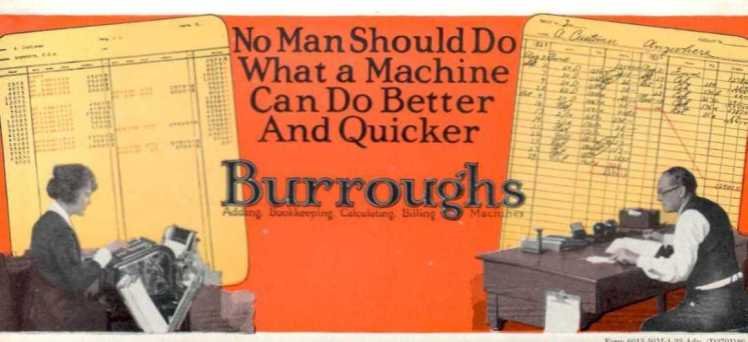
If the machine began to perform some of the tasks of men at the start of the 20th century, as the years went by women replaced the male operators of those machines. Depictions of clerical workers show a larger proportion of women, often depicting no men at all, and schools established to train potential employees explicitly and almost exclusively advertised to women. Ads aimed at reaching companies, however, no longer seem to emphasize the skill and importance of the clerical worker. One 1915 ad (right) seems to minimize the job performed by the woman depicted by stating that “A Little Girl Can Keep Your Books”. In the ad from 1923 depicted below left, while a woman operator is pictured she remains uncredited for the work being done. She seems almost to disappear as the machine itself is offered as the counterpart to a man.