August 2025 In the News

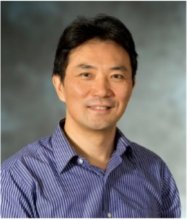
Zhang Leads New $5 Million NSF Ideas Lab Project:
Zhi-Li Zhang, Professor in the Department of Computer Science and Engineering, is the PI on a new NSF Ideas Lab project titled “Collaborative Research: Ideas Lab: Breaking Low: DRIVE-SAFE: Remote and Cooperative Autonomous Driving in Dynamic Environments using 5G/NextG Technology.” This project aims to break the low latency performance barrier in fifth generation (5G) wireless networks that hinders progress and adoption of the remote driving industry. It advances an innovative vertical-aware framework to optimize both 5G networks and the vertical application (remote driving). By ensuring low latency needed for remote driving, the developed solutions will allow a human teleoperator to remotely steer a connected and autonomous vehicle (CAV) through complex situations as if sitting in the driver seat. Technological advances enabled by this project will help (re-)establish U.S. leadership in next-generation (NextG) wireless telecommunications and major vertical industries such as automotive and robotic automation.
The new project is funded by the NSF TIPS program "Ideas Lab: Breaking Low Latency Barrier for Verticals in Next-G Wireless Networks". This is a two-year project focusing on technology translation and demonstration, and involves significant collaboration with General Motors, Nokia, the University of Utah and the University of California at Riverside. The University of Minnesota is the prime awardee on the project with a total budget of $5,061,769 over two years, but with a significant portion of the budget going to two industrial sub-awardees (General Motors about $1.6 million and Nokia about $1.4 million). Separately, the University of Utah will receive $1,598,846 and UC Riverside will receive $470,000. The total budget of the overall project is over $7.1 million for two years.
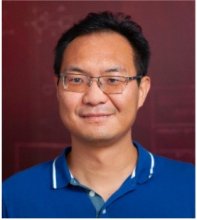
Sun Leads New NSF Project on Generative AI for Material Discovery:
Ju Sun, Assistant Professor in Computer Science and Engineering, is the principal investigator on a new project titled “ACED: Accelerating Materials Discovery by Learning with Physics-Informed Constraints,” which recently received a $500K, 18-month grant from the National Science Foundation (NSF). This project focuses on foundational work in materials discovery. It will utilize generative AI to construct models that can predict the properties of new materials and propose uses for the materials. ACED will have wide-ranging downstream applications, such as drug discovery, quantum computing, food production, and manufacturing. All three Co-PIs on the research team are from the University of Minnesota, with Assistant Professor Chris Bartel being the domain scientist from Chemical Engineering and Material Sciences (CEMS) and Professor Zhaosong Lu from Industrial and Systems Engineering (ISyE) specializing in numerical methods and helping with the unique computational problems that are likely to come up.
Current artificial intelligence is largely data-driven, utilizing vast datasets to train models that make future predictions. However, the data-driven approach is fallible and often does not account for various constraints in the real world. The new knowledge-guided machine learning framework in this project will work to incorporate basic physical laws and real-world constraints into models in order to get more accurate and usable results from AI.

Rajamani named 2025 Nyquist Lecturer by ASME:
Rajesh Rajamani, Professor in Mechanical Engineering, was named the 2025 Nyquist Lecturer by the American Society of Mechanical Engineers (ASME). Rajamani will deliver a lecture titled “From Theory to Practice: Nonlinear Observers Transforming Next-Generation Mechatronic Systems,” which will present recent results on nonlinear observers and their integrated use in modern mechatronic systems ranging from autonomous vehicles to wearable sensors.
Each year, ASME invites a prominent lecturer whose work has made significant contributions to the field to present a distinguished “Nyquist Lecture” at the annual Modelling, Estimation and Control Conference (MECC). The lecture aims to present a message of broad interest to the ASME Dynamic Systems and Control Division (DSCD) community. The Nyquist Lecturer is selected by the Executive Committee after receiving nominations from the broad DSCD membership.

Shin Leads new LCCMR Project on Collaborative Robot Utilization for Small Farms:
Ji Youn Shin, Assistant Professor in the College of Design, is the PI on a new project that has received support from the Legislative-Citizen Commission on Minnesota Resources (LCCMR) and has been selected for inclusion in their annual recommendations to the Minnesota Legislature on how to allocate proceeds from the state’s Environment and Natural Resources Trust Fund. Working with the Hmong American Farmers Association, this project will customize robotic technologies for use on small farms and train farmers to incorporate these robots into their traditional agricultural practices. The project will customize and implement mobile robots capable of traveling in narrow alleys between crops, navigating uneven terrain and waterlogged soils. The developed robotic solutions will assist farmers in improving efficiency for various farming operations while minimizing environmental impact, incorporating farmer needs and feedback during design, training and field testing.
If approved by the 2026 Legislature and signed into law by the Governor, the project would begin as early as July 2026. The project will provide $524,000 in direct costs to the research team. The other Co-PI on the project is Rajesh Rajamani, Professor in Mechanical Engineering.

Stern wins NSF Early Career Award:
Raphael Stern, Assistant Professor in Civil, Environmental and Geo Engineering, is a recipient of the prestigious Early Career Award from the National Science Foundation for 2025. His project is titled “CAREER: Harnessing Artificial Intelligence to Improve the Efficiency of Transportation Control Infrastructure,” and will provide $518,552 in funds for five years of research work. The project is aimed at research which leverages individual trajectory data to study traffic flow dynamics using a multiscale formulation, so that one can learn from microscopic driving behavior to infer macroscopic traffic flow dynamics. The research intends to support the creation of new traffic models by integrating high-fidelity trajectory data and machine learning techniques and will create novel traffic control strategies under both current and future transportation infrastructure settings.
To enable next generation traffic control that considers the dynamics of individual vehicles and their impact on the aggregate traffic flow, the research intends to (i) develop methods that rely on low-rank characterizations of time-series driving data to rapidly and reliably identify an individual vehicle driving signature, (ii) develop an artificial intelligence-guided modeling framework that relies on physics-informed learning to quickly predict the resulting aggregate traffic flow dynamics of a particular collection of vehicles with distinct driving signatures and a specified local interaction network topology, and (iii) design a suite of next-generation traffic control options including both control at fixed locations in the infrastructure, as well as control distributed throughout the flow that leverage more precise knowledge of the macroscopic dynamics to adjust control strategies based on the driving signature of individual vehicles and the anticipated resulting aggregate flow dynamics.

Feldkamp Receives the NSF Graduate Research Fellowship:
Michael Feldkamp, PhD student in Mechanical Engineering, has been awarded the National Science Foundation (NSF) Graduate Research Fellowship, a highly competitive program that recognizes exceptional graduate students in STEM fields. The fellowship provides three years of financial support, including an annual stipend and tuition coverage, to help students pursue advanced research and contribute to innovations in (STEM). Fellows are selected based on their potential for leadership and their ability to address global challenges through impactful research.
Michael is advised by Rachel Gehlhar Humann, MnRI faculty member and Assistant Professor in Mechanical Engineering. She shared her thoughts on Michael’s succes: "I'm excited that Michael has been awarded the NSF Graduate Research Fellowship, especially in a year when fewer fellowships were granted. Michael joined the program with significant undergraduate research experience, having worked in Dr. Kodandaramaiah's lab, and has quickly demonstrated his ability to conduct impactful research in the Humann Bionics lab. He is a quick and independent learner and thinks critically about new ideas. This fellowship not only recognizes his past accomplishments, but also gives Michael the opportunity to plan research long-term, enabling him to pursue innovative and impactful ideas to advance lower-limb prosthesis control."
Michael also shared his thoughts on receiving the fellowship: "I am incredibly honored to have received the NSF Graduate Research Fellowship. As I accept this award at a time of immense uncertainty for the future STEM research and education, I treasure it as both a foundation for my future studies and a symbol of responsibility to my community. This award would not have been possible without the support I received from Dr. Kodandaramaiah and the Biosensing and Biorobotics Laboratory. It was through the amazing opportunities I had with these individuals that I grew my research interests in the intersection between engineering and human health, leading me to where I am today. I am now more excited than ever to push forward in my current work with Dr. Humann, developing powered prosthetic leg control methods to enable speed adaptation and prevent falls."