Graphene - yellow fluid image with blue dots

William I. Fine Theoretical Physics Institute

FTPI Mission Statement

The William I. Fine Theoretical Physics Institute (FTPI) was established with the primary goal of conducting research in theoretical physics at a world-class level. By so doing, FTPI contributes significantly to the science of physics, improves the quality of education, and enriches the intellectual environment of both the University of Minnesota and the State of Minnesota.

News

Dark matter illustration

Dark Matter and Ultra-relativistic Freeze-out

A recent paper on dark matter published in Physical Review Letters, is highlighted on phys.org by author Sam Jarman.
(a,b) The Wigner distribution vs the photonic quadratures x = √ 2Re(α) and p = √ 2Im(α).

New Theoretical Framework for Analysing Decoherence in Non-linear Resonators Used to Create Bosonic Qubits

Researchers including FTPI's own Prof. Alex Kamenev have presented a "new theoretical framework for analysing decoherence in nonlinear resonators used to create bosonic qubits."
Steven Girvin

2026 Misel Family Public Lecture

19th Annual Misel Lecture with Professor Girvin, Yale University. Wednesday, October 28th @ 7:00 pm in the McNamara Alumni Center.
Upcoming Workshops

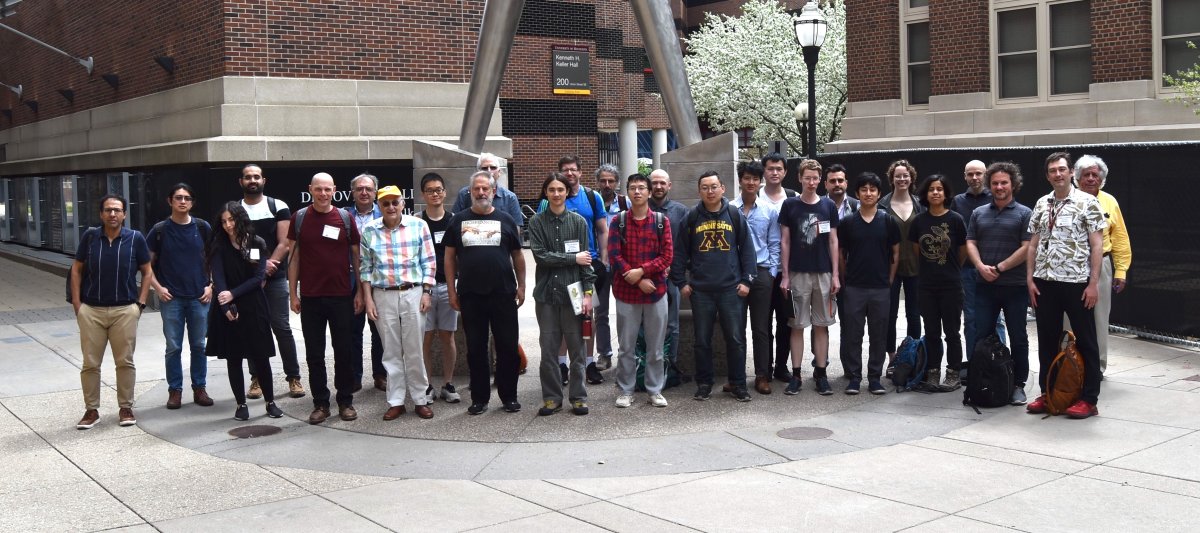
CAQCD workshop group photo
 

Horizons of Quantum Computation 
Thursday, May 14 - Saturday, May 16, 2026

New Developments in 2D Correlated Materials 
Wednesday, May 20 - Friday, May 22, 2026

About Us

The Theoretical Physics Institute was first established in 1987, thanks to the support of William I. Fine, a generous and visionary donor and friend. In 2002, following his untimely death, the Institute was renamed in his honor. To fulfill its mission, FTPI leads a wide variety of programs, including running scientific meetings, mentoring students and postdocs, and providing outreach to the public. Together, these programs support the development of and awareness of research that could answer questions at the cutting edge of theoretical physics. These programs also help build links to other areas of science and engineering, including industrial research, broadening the impact of theoretical physics in those and other fields.