AEM Colloquium Series
About
The Department of Aerospace Engineering and Mechanics holds its colloquium on Fridays from 2:30 pm to 3:30 pm. Unless otherwise indicated, all lectures will take place in Akerman Hall 209 this semester. Please note some events may be subject to change.
Fall 2026 - Spring 2027
Professor Yi-chao Chen, September 25, 2:30pm
Mechanics of Growth and Growth of Mechanics
As an active research area in biomechanics, mechanics of growth studies the mechanical aspects of growth of biological tissues. While the classical theories of mechanics have provided powerful tools in studying the growth of biological tissues, the physiological process of growth, in turn, presents special challenges to the theory of mechanics, and brings forth the growth of mechanics itself. In this talk we discuss some issues that have emerged in this process.
The existing mechanics theory of growth is based on the decomposition of the deformation gradient tensor into a growth tensor and an accommodation elastic tensor. This decomposition requires a fixed reference configuration from which the deformation gradient can be properly defined. It is built on a fundamental premise in continuum mechanics that there exists a one-to-one correspondence between the material particles in the reference configuration and in the current configuration. The assumption of the one-to-one correspondence is, however, inconsistent with a physical process of growth in which the newly deposited materials particles did not exist in a fixed reference configuration. In particular, the existing growth theory is incapable of modeling the surface growth in which changes in topology can occur as a material surface grows into a volume. In this talk, we present a theory that does not require the existence of a fixed reference configuration.
To set the stage for the new growth theory, we first discuss a theory of elasticity that does not require a fixed reference configuration. In this theory, the movements of the material particles are described by the velocity field in the current configuration. The constitutive theory does not rely on the concept of a natural state and a fixed reference configuration. Instead, it uses the current configuration as reference. As the elastic body deforms, the response function, which gives the stress tensor in terms of the deformation gradient, is constantly updated. We derive an evolution equation for the response function.
The proposed growth theory is then developed by incorporating a growth rate field into the above elasticity theory. The growth rate field, defined on the current configuration, describes how new material particles are added to a growing elastic body in its current state. For volumetric growth, the growth rate field has its support on the growing region. In contrast, for surface growth, the growth rate field has support on a surface and is conveniently described by singular distribution functions. The velocity field may suffer jump discontinuities across the surface. The evolution equation for the response function of a growing elastic body is derived that describes how the stress changes with growth and deformation. An example of internal surface growth is presented.
Yi-chao Chen is a Professor at University of Houston. He received his Ph.D. from the University of Minnesota, and M.S. from Johns Hopkins University. His research interests include continuum mechanics, biomechanics, stability analysis, bifurcation theory, and multifunctional materials.
Dr. Koki Ho, September 18, 2:30pm
Changing the Game in Space Logistics and In-Space Servicing
Summer Research Mentorship Program 2026
Kalpesh Jaykar and Logan Anderson, July 31, 2:30pm
An Integral Representation and Constructive Interference of Electromagnetic Fields
ACS3 Attitude Determination and Analysis
Logan Anderson is a 5th year PhD candidate in the ARDC Lab and NSTGRO fellowship recipient. He will be joining the Control Systems Design & Analysis Branch at NASA Marshall as a civil servant in November. His work is focused on system identification and control design for flexible aerospace systems. Outside of work, Logan can usually be found biking or climbing rocks and ice depending on the time of year.
Please note this week's colloquium will be held in Akerman Hall 225.
Connor Switala and Yogesh Chandrashekar, July 24, 2:30pm
Investigation of Nonequilibrium Methods using a Stagnation Line Solver
Unraveling Tension–Compression Failure Asymmetry in Soft Solids via Logarithmic-Strain Invariants
Yogesh Chandrashekar is a fourth-year PhD student in the Soft Materials Mechanics Lab under the guidance of Prof. Kshitiz Upadhyay. His research focuses on understanding the mechanics of damage and failure in soft materials, such as hydrogels and elastomers, by integrating advanced experimental techniques with theoretical modeling. Outside of research, he enjoys swimming and playing table tennis.
Please note this week's colloquium will be held in Akerman Hall 225.
Erik Lehner and Leonid Scott, July 17, 2:30pm
Data-Driven Model-Free Robust Performance Refinement of Dual-Stage Hard Disk Drive Controllers
Freestream Reconstruction in Hypersonic Shock Tunnels
Leonid Scott is entering his second year as a PhD student advised by Dr. Candler and Dr. del Val. His work combines both hypersonic computational fluid dynamics, and uncertainty quantification, to make better use of hypersonic wind tunnels. Prior to joining University of Minnesota, he developed the hypersonic CFD code, US3D, and worked as a software engineer within various non-engineering related startups. Next week, Leonid will give a similar talk in Munich Germany for the World Congress on Computational Mechanics.
Minsen Yuan and Rushikesh Kabadi, June 26, 2:30pm
Trajectory Optimization for Energy-Sharing UAV-UGV with Multiple Task Locations
Behavior of Nanocrystalline Materials in Extreme Conditions
Rushikesh Kabadi is a fourth year PhD student in the Multiscale Extreme Mechanics and Materials (MXMM) (called MAXIMUM) lab working with Prof. Ravindran. His work focuses on understanding behavior of materials in extreme conditions. His research combines experiments, computational modeling, and materials characterization to investigate how microstructure influences deformation, damage, and failure during high-strain-rate events such as ballistic impacts. His interest lies in shock physics of solids, dislocation dynamics, material modelling, and mechanics of materials. Outside research, he is a fitness enthusiast. He plays cricket professionally, climbs frequently, and does calisthenics.
Nihar and Carter Vu, June 12, 2:30pm
MFINDER: A Multi-Fidelity, Physics-Informed Framework for Recovering and Denoising Incomplete Full-Field Kinematic Measurements
Numerical Simulation of Hypersonic Boundary Layers
Ping-Yen and JJ Serdoncillo, June 5, 2:30pm
Solar Sail Momentum Management Using Model Predictive Control
Discrete Vortex Modeling of Flapping Propulsors
Fall 2025-Spring 2026
Abigail Hunter, April 24, 2:30pm
Mesoscale Investigation of Dislocation-Grain Boundary Interactions in Metals and Alloys
"Microstructure” refers to the large number of crystal grains and their corresponding boundaries that make up metals and alloys. A material’s ability to accommodate stress induced through mechanical loads is dependent on the ease with which dislocations can move through the microstructure to relieve accumulated stress. Grain boundaries (GBs) are the largest impediment to this motion – this is true to some extent regardless of the grain size. The GB structure defines whether a dislocation can transmit across a GB, be partially absorbed at the GB, or glide along the GB and re-emit, altering the GB structure. For poor alignment between grains, dislocations can pile-up against GBs, building localized internal stress regions that work harden the material. This preferential localization of strains and plastic deformation at specific microstructural sites are precursors to damage nucleation. Thus, understanding and predicting dislocation-grain boundary interactions are key for capturing mechanical response, but they are also incredibly complex in part due to the vast number of possible grain boundaries and corresponding dislocation interactions. This talk will focus on recent multiscale modeling efforts addressing dislocation-grain boundary interactions, with particular focus on methods/approaches that can be used to scale information.
Dr. Abigail Hunter earned a Ph.D. in Mechanical Engineering from Purdue University in 2011, and a B.S. degree in Mechanical Engineering from the University of Utah in 2006. Following her Ph.D., she joined Los Alamos National Laboratory (LANL) as a postdoctoral research associate in 2011 in the X Computational Physics (XCP) Division, and then converted to a staff scientist in 2012. She is currently the group leader for the Materials and Physical Data Group within XCP and the Deputy Director for the Institute of Materials Science at LANL. She is also the Editor-in-Chief for the ASME Journal of Engineering Materials and Technology, and an Associate Editor for the International Journal of Plasticity. In 2020, she received the Alum of the Year Award from the Department of Mechanical Engineering at the University of Utah in recognition for outstanding achievements in Mechanical Engineering and service to the community. In 2019 she was nationally recognized as a recipient of the Presidential Early Career Award for Scientists and Engineers (PECASE) for work developing and implementing models addressing brittle damage and dislocation dynamics in metals, which are two capabilities designed to address questions concerning advanced manufacturing of new materials. Her research interests include modeling the strength and damage of metals and alloys at both the meso- and macro-scales, with specific interest in connections between microstructure, dislocation-based deformation behaviors, and overall material response.
Daniel Chung, April 10, 2:30pm
Fluid Mechanics of Riblets Drag Reduction
Riblets are a surface texture composed of tiny ribs applied on aircraft skin to reduce drag, which saves on fuel, increases the payload and extends the range. To the fast-moving turbulent air that flows over it, riblets turn out to be smoother, generating less skin friction, than a perfectly flat surface. However, riblet performance is highly sensitive to their cross-sectional shape and features, which is bad news because the micron-sized ribs, imperceptible to the naked eye and challenging to measure even with precision instruments, are impossible to manufacture and maintain perfectly. Thus, accurate tolerancing, not only for manufacture but also for lifetime wear planning and monitoring, is key to this technology, requiring predictive capability of the kind that derives from advances in basic understanding. In this regard, I will present some of the progress we have made in the last few years, building on decades of research, on the fluid mechanics of turbulence over riblet surfaces. The support of the Australian Research Council, Cooperative Research Australia and the U.S. Air Force Office of Scientific Research FA2386-23-1-4071 is gratefully acknowledged.
Daniel Chung is a professor in the Department of Mechanical Engineering at the University of Melbourne. He obtained his bachelor's degree in engineering and computer science from the University of Melbourne in 2003, and his PhD in aeronautics from Caltech in 2009. He was a postdoc at the Jet Propulsion Laboratory before joining the University of Melbourne in 2012. Daniel's research uses computational fluid dynamics, where he tries to distil turbulent flows into simplified problems and to build physics-based models for prediction. Recently, he has been interested in understanding and controlling turbulent flow and thermal convection over rough surfaces, riblets and moving wavy surfaces.
Teresa Portone, March 27, 2:30pm
Beyond Parametric Uncertainty: Methods for Model-form Uncertainty Quantification
Uncertainty quantification (UQ) is critical for informing decisions because it provides a measure of confidence in model predictions, given the uncertainties present in the model. While approaches to characterize uncertainties in model parameters are well established, it is less clear how to address uncertainties arising when the equations of a mathematical model are themselves uncertain—that is, when there is model-form uncertainty (MFU). MFU often arises in models of complex physical phenomena where (1) simplifications for computational tractability or (2) lack of knowledge leads to unknowns for which appropriate mathematical forms are undefined or may not exist. Left uncharacterized, MFU can lead to errors in the governing equations (model-form error) and inconsistencies between model outputs and experimental data (model discrepancy). In this talk, I introduce several approaches that have been developed to address MFU. I then present recent work developing a hybrid physics-data MFU representation of a reduced gas-surface chemistry model for hypersonic ablation. SNL is managed and operated by NTESS under DOE NNSA contract DE-NA0003525
Teresa Portone is Principal Member of the Technical Staff at Sandia National Laboratories in Albuquerque, NM. She holds a Ph.D. in Computational Science, Engineering, and Mathematics from the Oden Institute for Computational Engineering and Sciences at the University of Texas at Austin and a B.S. in Mathematics from the University of Alabama. She joined Sandia as a staff member in 2020. Her research focuses on developing and deploying methods to quantify uncertainty in computational models used for national security applications, with a particular focus on methods to quantify model-form uncertainty and model prediction reliability.
Kenshiro Oguri, February 27, 2:30pm
Stochastic Planning, Control, and Optimization for Spacecraft Autonomy
Peng Wei, February 20, 2:30pm
AI-powered Automated Air Traffic Control
Both the U.S. national airspace system and the low-altitude airspaces call for innovations in automated air traffic control. For the national airspace system, the FAA's Brand New Air Traffic Control System (BNATCS) needs effective automation tools for air traffic monitoring and conflict resolution to support human air traffic controllers; for the low-altitude airspaces hosting small unmanned aerial systems (sUASs) and the emerging electric vertical take-off and landing (eVTOL) aircraft, automated air traffic control is the only feasible way to accommodate the envisioned high-density, fast-temp flight operations. In this talk, the speaker will present the models and algorithms of using reinforcement learning (RL) and large language models (LLM) for automating air traffic control, specifically aircraft separation assurance and conflict resolution. In addition, he will also discuss the readiness and challenges of testing, certifying and implementing these artificial intelligence (AI) tools in safety-critical aviation applications.
Peng Wei is an associate professor in the Department of Mechanical and Aerospace Engineering at the George Washington University, with courtesy appointments at Electrical and Computer Engineering Department and Computer Science Department. By contributing to the intersection of control, optimization, machine learning, and artificial intelligence, he and his team develop autonomous functions and decision support tools for aviation, avionics and aerial robotic systems. His current focuses are (1) safety, efficiency, and scalability of aircraft autonomy, multi-agent autonomy and human-autonomy teaming; (2) aviation applications including air traffic management/control (ATM/C), airline operations, UAS traffic management (UTM), advanced air mobility (AAM), and aviation electrification; and (3) AI safety, security and certification for safety-critical systems. Prof. Wei is an AIAA Associate Fellow. He serves as an associate editor for AIAA Journal of Aerospace Information Systems (JAIS), AIAA Journal of Guidance, Control, and Dynamics (JGCD), and Journal of Open Aviation Science. He received his Ph.D. degree in Aerospace Engineering from Purdue University in 2013 and bachelor’s degree in Control Theory from Tsinghua University in 2007.
Dennis M. Kochmann, January 30, 2:30pm
Design of Architected Materials
Architected materials (also known as metamaterials) have become not only a popular solution for applications that require materials with superior, peculiar or extreme properties, but they also continue to present challenges for optimization and design across scales: given a combination of target properties, what structural realization offers exactly those target properties? This inverse challenge has been tackled by a variety of approaches – from classical topology optimization to machine learning-based generative design. Here, we will discuss several topical challenges in the inverse design of architected materials and present approaches for their design. This includes the multiscale optimization of elastic architected materials, the design of spatially graded metamaterials for wave guidance based on ray tracing, and the generative design of architected materials by methods of machine learning. For each example, we demonstrate how theory and simulations have enabled new design frameworks of architected materials for various applications, and how this field is still offering many challenges and opportunities.
Dennis M. Kochmann is Professor of Mechanics and Materials and Head of the Department of Mechanical and Process Engineering at ETH Zürich in Switzerland. He studied Mechanical Engineering at Ruhr-University Bochum (Germany) and Engineering Mechanics at the University of Wisconsin-Madison. After postdoc positions at Wisconsin and Caltech, he became Assistant Professor of Aerospace at the California Institute of Technology in 2011, and Professor of Aerospace in 2016, a position he held through 2019. In April 2017 he joined ETH Zürich as Professor of Mechanics and Materials. His research focuses on the link between microstructure and properties of natural and architected materials, which includes the development of theoretical, computational, and experimental methods to bridge across scales from nano to macro. His research has been recognized by, among others, IUTAM’s Bureau Prize in Solid Mechanics, GAMM’s Richard von Mises Prize, an NSF CAREER Award, ASME’s T.J.R. Hughes Young Investigator Award, an ERC Consolidator Grant, and IACM’s John Argyris Award. He serves as Associate Editor for ASME’s Applied Mechanics Reviews and Archive of Applied Mechanics, as Vice-Chair of the Swiss Community for Computational Methods in Applied Sciences (SWICCOMAS) and on the Board of Directors of the Society of Engineering Science (SES).
Bharath Ganapathisubramani, December 5, 2:30pm
Vortex Dominated Flows: Can’t live with them…Can’t live without them…
Vortex-dominated flows are in abundance in engineering applications and natural environment. Vortical structures influence not only the flow field but also have major implications on forces and moments experienced by objects as well as noise generated by them. In this talk, I will present results from work carried out in my group across different projects. We will focus on at least two case studies. The first is aimed at understanding the fluid-structure interactions in flow past porous bluff bodies while the second will focus on swimming efficiency of marine reptiles in Mesozoic era. These case studies will show that the behaviour of vortex interactions have a profound impact well beyond their specific application and that understanding these interactions can spawn new applications in varied areas including flow manipulation and bio-inspired vehicle design.
Bharath Ganapathisubramani is a Professor of Experimental Fluid Mechanics in the Department of Aeronautics and Astronautics at the University of Southampton. He completed his Masters and PhD in Aerospace Engineering at the University of Minnesota and an undergraduate degree in Naval Architecture and Ocean Engineering at the Indian Institute of Technology-Madras. He was an Assistant Professor at Imperial College London and moved to Southampton as an Associate Professor. He currently serves as an Associate Editor for Experiments in Fluids and Flow. He is a Fellow of Royal Aeronautical Society and the American Physical Society as well as an Associate Fellow of AIAA.
Jie Ding, November 21, 2:30pm
Designing Intelligent AI: Insights from Human Cognition
Modern AI systems are evolving from passive tools to autonomous agents capable of reasoning, learning, and collaboration. This talk explores emerging research directions in generative AI and foundational principles inspired by human cognition: continuous learning and adaptation, effective knowledge transfer, and multi-objective decision making. The discussion aims to stimulate thoughts on developing domain-specific AI that can operate reliably in complex, real-world environments.
Jie Ding (https://jding.org) is an Associate Professor at the School of Statistics, University of Minnesota. He received his Ph.D. in Engineering Sciences from Harvard University in 2017, joined UMN in 2018, and earned early tenure promotion in 2023. Jie's research lies at the intersection of AI, statistics, and scientific computing, with a current focus on AI scalability and trustworthiness. His work has been recognized with the NSF CAREER Award, ARO Young Investigator Award, Cisco Research Award, Meta Research Award, and several best paper honors. He created a new UMN course on Generative AI (STAT8105) with open-source course materials at https://genai-course.jding.org, which has attracted broad interest from both students and professionals.
Laura De Lorenzis, November 7, 2:30pm
Variational phase-field modeling of fracture: toward second-generation models
Variational phase-field modeling of fracture, first introduced in 2000 for brittle fracture of homogeneous and isotropic materials under predominant mode-I loading, has since evolved in multiple directions. Extensions now cover multiaxial stress states, heterogeneous and anisotropic materials, as well as ductile, dynamic, and rate-dependent fracture. The original model was derived from a variational reformulation of Griffith’s fracture criterion through regularization. However, in many subsequent extensions, the inherent rigidity of the variational framework has prompted the development of non-variational models, which trade the theoretical and practical advantages of the variational setting for greater flexibility in reproducing experimental observations. In this presentation, we explore strategies to enrich variational phase-field models with sufficient flexibility to overcome current limitations, potentially paving the way for a second generation of variational phase-field fracture models. Preliminary results will be shown on fracture under multiaxial stress states, fracture of anisotropic materials, and dynamic fracture.
Laura De Lorenzis received her Engineering degree and her PhD from the University of her hometown Lecce, in southern Italy, where she first stayed as Assistant and later as Associate Professor of Solid and structural mechanics. In 2013 she moved to the TU Braunschweig, Germany, as Professor and Director of the Institute of Applied Mechanics. There she was founding member and first Chair (2017-2020) of the Center for Mechanics, Uncertainty and Simulation in Engineering. Since 2020 she is Professor of Computational Mechanics at ETH Zürich, in the Department of Mechanical and Process Engineering. She was visiting scholar in several renowned institutions, including Chalmers University of Technology, the Hong Kong Polytechnic University, the Massachusetts Institute of Technology (as holder of a Fulbright Fellowship in 2006), the Leibniz University of Hannover (with an Alexander von Humboldt Fellowship in 2010-2011), the University of Texas at Austin and the University of Cape Town. She is the recipient of several prizes, including the RILEM L’Hermite Medal 2011, the AIMETA Junior Prize 2011, the IIFC Young Investigator Award 2012, the Euromech Solid Mechanics Fellowship 2022, the IACM Fellowship 2024, two best paper awards and two student teaching prizes. In 2011 she was awarded a European Research Council Starting Researcher Grant. She has delivered over 30 plenary lectures at international conferences and authored or co-authored more than 160 papers on international journals on different topics of computational and applied mechanics. Since 2023 she is Editor of Computer Methods in Applied Mechanics and Engineering.
Shaoshuai Mou, October 31, 2:30pm
Control and Learning for Autonomous Systems
Modern society has been relying more and more on engineering advance of autonomous systems, ranging from individual systems (such as a robotic arm for manufacturing, a self-driving car, or an autonomous vehicle for planetary exploration) to cooperative systems (such as a human-robot team, swarms of drones, etc). In this seminar we will discuss our recent research in integration of optimization, networks and learning to address fundamental challenges in enabling autonomous systems to be optimal, adaptive, cooperative and swarming. Especially we will discuss our most recent progress in developing a fundamental framework for learning and control in autonomous systems. The framework comes from a differentiation of Pontryagin’s Maximum Principle and is able to provide a unified solution to three classes of learning/control tasks, i.e. adaptive autonomy, inverse optimization, and system identification. We will also present applications of this framework into human-robot teaming, especially in enabling an autonomous system to take guidance from human operators, which is usually sparse and vague. In addition, we will briefly introduce our recent progress in autonomy in space.
Shaoshuai Mou is the Elmer Bruhn associate professor in the School of Aeronautics and Astronautics at Purdue University. He received a Ph.D. in Electrical Engineering at Yale University in 2014, and then worked as a postdoc researcher at MIT for a year. He joined Purdue University as a tenure-track assistant professor in 2015, and was promoted to be Associate Professor with Tenure in 2021. His research group Autonomous & Intelligent Multi-agent Systems (AIMS) lab has been focusing on advancing control theory with recent progress in optimization, networks and machine learning for autonomous and robotics systems, with particular research interest in inverse optimal control for learning-from-demonstrations in robotics, parameter adaptation in optimal control, integration of control with learning, human-robot teaming, and distributed algorithms for control and optimization in multi-agent systems. Mou co-directs Purdue’s Institute for Control, Optimization and Networks (ICON) , consisting of more than 100 faculty members from more than 15 departments across Purdue University, which aims to provide a research and education platform for control of autonomous and robotics systems.
Curt A. Bronkhorst, October 24, 2:30pm
Modeling the Statistical Thermomechanics of High-Stress Triaxiality Porosity-based Ductile Damage
Porosity-based ductile damage within polycrystalline metallic materials is known to be strongly dependent upon microstructural details for light to moderate shock loading conditions. This is presumed to be dictated by spatially distributed stress conditions and defect pore nucleation strength due to the statistical aggregate nature of the material. During shock loading, in addition to pore nucleation and growth, the material deforms via finite elastic and plastic mechanisms. The power delivered to the material during shock loading is distributed to each deformation mechanism as stored and dissipated power with change of temperature by both Thompson-Joule and plastic power dissipation effects. A new finite deformation probabilistic porosity-based ductile damage model for high triaxiality conditions is presented which represents pore nucleation by a new combined probability distribution for stress and pore nucleation strength distributions. This nucleation model is derived from experimental and computational physics data.
A new isotropic plasticity model is included in the damage model which accounts for both thermally activated and phonon-drag regimes of dislocation motion with dislocation density as the primary state variable. This model accounts for both stored energy via an effective temperature measure and thermal energy via kinetic- vibrational temperature. This formulation also proposes an expression for the Taylor-Quinney factor which is guided by second-law restrictions. Porosity growth is represented by a thick-walled sphere unit cell approach which allows for inertial resistance to growth and facilitated by plastic deformation. A governing equation for thick wall sphere growth due to applied external pressure is derived which also accounts for surface energy and kinetic energy. Closure of this governing equation is achieved with a reduced-order model of inertial power as a function of loading conditions.
This reduced-order model is derived from a thick-walled sphere computed database by employing the isotropic plasticity model to perform varying initial temperature and strain rate condition thick-walled sphere calculations. The finite deformation ductile damage model is thermodynamically consistent and accounts for energy partitioned to finite-elasticity, dislocation slip plasticity, dislocation energy storage, kinetic energy, surface energy, and thermal energy. The physics computation work will be presented and connections with experiments will be made. Results for the ductile damage model will also be presented and compared with plate-impact experiments conducted on high-purity tantalum.
Dr. Curt A. Bronkhorst is Harvey D. Spangler Professor of Applied Mechanics at the University of Wisconsin – Madison in the Department of Mechanical Engineering and associate appointments in the Nuclear Engineering Department and Materials Science and Engineering Department. Prior appointments include Senior Scientist in the Theoretical Division at Los Alamos National Laboratory and Senior Scientist at Weyerhaeuser Company. He is director of the Army Research Laboratory funded Center for Extreme Events in Structurally Evolving Materials and guest scientist at Los Alamos National Laboratory. Bronkhorst is emeritus Honorary Commander for the Wisconsin Air National Guard 115th Fighter Wing. He is fellow of the American Society of Mechanical Engineers and a vice-chair of the ASME Materials Division Executive Committee. He is Associate Editor of the International Journal of Plasticity and also president of Northland Partners, LLC.
Gianluca Iaccarino, October 17, 2:30pm
Data Science Tools for Studying Laser-Induced Ignition in a Rocket Combustor
Laser-induced ignition is envisioned as a lightweight and effective technology for second-stage boosters and low-orbit maneuvers. One of the critical design challenges is to ensure reliability while minimizing fuel waste and overpressure. The presence of variability in the propellant mixture at the time of the laser firing, the imprecision present in the laser targeting and other potential differences between the design scenarios and the real-world operations make the process highly stochastic. In a large project at Stanford, we have developed high-fidelity simulation tools to faithfully represent the high-speed turbulent propellant dynamics, the laser energy deposition and the combustion dynamics of reactive mixture. The computations, together with a companion experimental campaign form the basis of several data-science activities. We will summarize how we have used the datasets to: (1) build data-driven surrogates to study ignition reliability, (2) perform validation in latent spaces to compare 100s of experimental and computational realizations, (3) carry out uncertainty quantification and attribution studies using multi-fidelity ensembles, (4) develop machine learning tools to enhance experimental diagnostics.
Gianluca Iaccarino is the Robert Bosch Chair and Professor of the Mechanical Engineering Department at Stanford University. He received his PhD in Italy from the Politecnico di Bari (Italy) in 2005, and joined the faculty at Stanford in 2007. Since 2014, he has been the Director of the PSAAP Center at Stanford, funded by the US Department of Energy focused on multiphysics simulations, uncertainty quantification, data science and exascale computing. He received the US ACM Thomas Hughes Medal, the Presidential Early Career Award for Scientists and Engineers (PECASE) award and is a Fellow of APS and Senior Fellow of AIAA.
Paul Dye, October 3, 2:30pm
Shuttle, Houston – a Life in Aerospace Engineering
Paul Dye, former Lead Flight Director for the Space Shuttle program, will talk about his life in aerospace engineering, space flight operations, and experimental aviation. He will talk about how he reached the center seat of Mission Control after serving as a systems flight controller for his first decade at NASA, his missions docking with (and building) space stations, and how the lessons learned in thirty years of flying space shuttles can be applied in the world of aerospace engineering. He will also touch on his life building, maintaining, and flying experimental aircraft, and how his fifty years as a pilot served to enhance his ability leading air and space missions.
As the longest-serving NASA Flight Director in history, Paul Dye was in a leadership position for 38 Space Shuttle missions, nine of which he served as the Lead Flight Director, responsible for development and training for the mission, as well as real time execution of all facets of the shuttle flight. Coordinating the work of thousands of mission planners, flight controllers, trainers, and astronauts, Dye spent twenty years in the center seat of Mission Control. These years were preceded by twelve years spent as a systems flight controller, and more years spent as an International Space Station Flight Director before his retirement in 2013.
Paul Dye has over 50 years of aviation experience as an aerospace engineer, aircraft builder and pilot. His scope has ranged from restoring classic light aircraft to planning and leading manned spaceflights. His love of flying machines dates back to early childhood, and he became involved with full-sized aircraft as a teenager, rebuilding J-3 Cubs in Minnesota. He earned his degree in Aeronautical Engineering with a specialization in aircraft design and flight testing from the University of Minnesota in 1982. He has flown over 140 different types of aircraft, many of them experimental, and many of those on their first flights. Dye is a licensed Commercial pilot rated for single and multi-engine, instrument, seaplanes, gliders, and several experimental jet aircraft. He is also a licensed airframe and powerplant mechanic as well as an FAA Designated Airworthiness Representative for Experimental Aircraft. He has built five aircraft (an RV-3, RV-8, Dream Tundra, Subsonex, and an electric Xenos motor glider) and is working on his sixth (an F1 Rocket). He was awarded the SETP Spirit of Flight Award in 2025.
For 33 years, he worked in increasingly responsible roles within the US (NASA) Manned Space Program, both as a technical expert in spacecraft systems and, eventually, as the overall lead of many missions to space. The winner of many prestigious awards including the Johnson Space Center Director’s Commendation, the NASA Outstanding Leadership Medal, and four NASA Exceptional Service Medals, Dye is the author of “Shuttle, Houston: My Life in the Center Seat of Mission Control”, his 2020 book covering the shuttle years from the perspective on MCC. He is well-known as a risk-management specialist and advises designers and builders – as well as pilots – on ways to build and operate aircraft with greater margins of safety. He is Leadership Consultant and speaker available to corporations and groups who wish to better their organizations and people.
Paul Dye is a Lifetime Member of the EAA, a Fellow of the Explorers Club, and was inducted into the Minnesota Aviation Hall of Fame in 2024.
Faculty Research: Fluids, September 26, 2:30pm
Introduction to Fluids Faculty
Friday's seminar will give students a chance to get to know our Aerospace Fluids Faculty.
Faculty Research: Systems, September 19, 2:30pm
Introduction to Aerospace Systems Faculty
This Friday's seminar will give students a chance to get to know our Aerospace Systems Faculty.
Faculty Research: Solids, September 12, 2:30pm
Introduction to Solids Faculty
This Friday's seminar will give students a chance to get to know our Solid Mechanics Faculty.
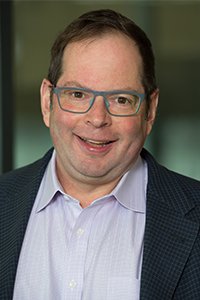
Professor Perry Leo, September 5, 2:30pm
Aerospace Engineering and Mechanics, University of Minnesota
The first meeting of the Fall 2025 Seminar Series (AEM 8000) will be a welcome speech from our department head, Professor Perry Leo.
Professor Leo studies phase transformation, pattern formation and material properties in complex, multiphase solids. Leo and his group use theoretical and numerical analysis to couple formation of microstructure in these materials to their properties, such as strength, fracture and fatigue resistance, and electrical and magnetic response. Leo’s work encompasses a range of materials, including composite materials, biological materials, metal alloys and liquid crystals.