Quirky Quantum Physics

A Summer of Quirky Quantum Physics

Join the University of Minnesota's School of Physics and Astronomy for a Quirky series of FREE public lectures on Amazing Advances in Physics! You are invited to come learn about the latest topics in physics research alongside fellow community members every Tuesday evening from late June through the end of July, 2026 here on campus at 10 Church Street (the old Bell Museum).

Featuring... Semiconductors, Superconductors, Quantum Computers, How It Began, and more!

Registration not required. To join our mailing list and express your interest in future lecture series, sign up here! 

Our audiences say...

"My mind was blown again and again." 
"Very informative and interesting! I learned that physics/astrophysics is accessible to an English major!"
"Having the opportunity to ask questions to leading researchers was a treat." 

June 23rd: The Solid State


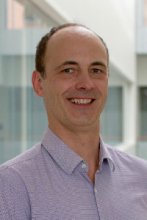
Headshot style photo, man with black hair, black glasses and a black polo shirt smiling at camera
Here we are, in the 21st century, and yet we are still waiting for the jetpacks and flying cars that were promised in 1950s science fiction movies and 1960s comic books. Those movies and comic books thought that we would have a revolution in energy (needed to have a flying car), while what we got instead was a revolution in information. This information revolution was made possible by the development of semiconductor and solid state physics, which in turn was made possible by the discovery of Quantum Mechanics. James Kakalios is a Taylor Distinguished Professor and Head of the School of Physics and Astronomy. His experimental research ranges from the nano to the neuro, and he is active in outreach and public engagement. In this talk you'll learn how three "simple" ideas, developed 100 years ago, made solar cells, LEDs, transistors, lasers, glow-in-the-dark toys and MRIs possible. 

June 30th: Superconductors!


Prof. Martin Greven
When most metals are cooled to very low temperatures, their resistance to the flow of an electrical current decreases, but then at a critical temperature, the resistance abruptly becomes zero! A current can now flow in the metal without any external applied voltage – and we call this material a Superconductor, a phenomenon that can only be understood using Quantum Mechanics. While previously believed to only apply to ordinary metals, forty years ago it was discovered that certain ceramics could also become superconductors – at temperatures much higher than observed in ordinary metals! If superconductivity could be observed at room temperature – the world would suddenly become a very different place! Martin Greven is a Distinguished McKnight University Professor in the School of Physics and Astronomy whose research involves experimental condensed matter physics, and in particular, the fabrication and study of novel superconducting materials.


July 7th: Fun with Quantum Computing


Prof. Fiona Burnell

Theoretical physicist Fiona Burnell, is a Professor in the School of Physics and Astronomy, and the inaugural Ed Tang Professor. When two sub-atomic particles such as electrons are brought close to each other, they can be put in a quantum entangled state. In this condition, a measurement on one electron will automatically alter the outcome of a measurement of the second electron – even if the two electrons are separated by several miles! Many large high-tech companies as well as universities are working to exploit particle entanglement to develop quantum computers. These computers will be able to solve various problems that would take conventional supercomputers many lifetimes to work out. From the development of new pharmaceuticals to the security of financial transactions over the internet, quantum computers, using a phenomenon that Albert Einstein dismissed as “spooky action at a distance,” have the potential to have a large impact on society.

July 14th: A Tunnel Through Nothing


Headshot style photo, man with black hair, black glasses and a black polo shirt smiling at camera
In 1926, Erwin Schrodinger published the famous equation that bears his name. This equation accounts for a wide range of strange atomic phenomena - but perhaps none is so puzzling as Quantum Tunneling. If two metals are separated by the vacuum of empty space from each other, then even if the electrons in one metal lack the energy to arc and jump the gap between them, the Schrodinger equation predicts that there is a probability that they will nevertheless show up in the second metal. This phenomenon is not just a theoretical curiosity - but the chips in your smartphone and computer memory in your laptop rely on this effect. Quantum tunneling also accounts for some forms of radioactivity and more importantly - the sun wouldn't shine without it! 
 
James Kakalios is a Taylor Distinguished Professor and Head of the School of Physics and Astronomy. His experimental research ranges from the nano to the neuro, and he is active in outreach and public engagement.

July 21st: Why Particles Don't Exist


Prof. Aleksey Cherman
Are atoms and electrons particles, or waves? Quantum mechanics famously answered: both. In this talk, Aleksey Cherman — an Associate Professor in the School of Physics and Astronomy, working in the Nuclear Theory group at UMN — will argue that this textbook answer isn't quite right either. The deeper answer, developed over the last century, is that neither particles nor waves are the right picture. What we call electrons, photons, and quarks are ripples in underlying entities called quantum fields, and their behavior explains an astonishing range of phenomena — from the rocks, liquids, and metals studied in tabletop experiments, to the inner workings of matter studied in high-energy collisions probed at particle colliders, to the lives and deaths of stars. Along the way, we'll see where mass comes from, and why "particle" turns out to be a useful fiction, all without any math.
 

July 28th: How it Began


Prof. Michel Janssen

The quantum revolution of the 1925–26 has often been portrayed as the mother of all paradigm shifts. While the new mechanics did indeed give us a whole new framework for doing physics, there is more continuity with the old framework than meets the eye. In this talk, Michel Janssen, professor for history of science in the School of Physics and Astronomy, will tell the story of the development of quantum mechanics from Planck, Einstein, Bohr and others to Heisenberg, Schrödinger, Dirac and others in a way that does justice to both continuous and discontinuous elements. To do so, Janssen will rely on building metaphors such as using a scaffold to erect an arch or combining different styles to build a cathedral to describe the genesis of quantum mechanics. The talk will be based on a series of drawings by a professional illustrator, Laurent Taudin, showing the gradual construction of the highly non-classical cathedral of quantum mechanics. 


Frequently Asked Questions

When will the talks take place?
Events are scheduled Tuesdays from 7:00pm - 8:00pm, every Tuesday between June 23rd and July 30th, 2026.

Where will the talks take place?
Talks will be in 10 Church Street (the old Bell Museum) on the University of Minnesota's East Bank campus. There is street parking available on campus, and several parking garages open to the public nearby. See Parking and Transportation Services' webpage for more information. Campus is also readily accessible via public transit, and is well mapped on all major smartphone navigation apps to make finding us a breeze.

How much does it cost to attend the talks?
The events are FREE! The School of Physics and Astronomy is presenting this program free of cost to the public to connect with the community. The only cost may be parking -- the garages closest to 10 Church Street are $1/hour after 3 p.m.

Do I need to attend all the talks to follow along? 
Each talk is self-contained and independent -- you don't need to have been to any of the earlier talks to understand later ones. Come to as many or as few as you'd like!

Will the talks be recorded?
Yes, just go to our YouTube channel to see videos of last summer's talks. A Summer of Quirky Quantum will be uploaded at the end of summer 2026.