Yamabe Memorial Symposium
2026 Yamabe Memorial Symposium: October 2 – 4
The School of Mathematics will host the Yamabe Memorial Symposium from October 2 – 4, 2026, on the University of Minnesota Twin Cities campus. This year's programming focuses on the theme of Low-Dimensional Topology and Gauge Theory.
Speakers
- Paul Feehan (Rutgers University)
- Jennifer Hom (Georgia Institute of Technology)
- Michael Hutchings (University of California, Berkeley)
- Hokuto Konno (University of Tokyo)
- Francesco Lin (Columbia University)
- András Stipsicz (Rényi Institute of Mathematics)
- Zoltán Szabó (Princeton University)
- Clifford Taubes (Harvard University)
All talks are in 16 Vincent Hall.
Friday, October 2
- 3:00 – 4:00 p.m.: Michael Hutchings
- 4:30 – 5:30 p.m.: Paul Feehan
Saturday, October 3
- 9:30 – 10:30 a.m.: Clifford Taubes
- 11:00 a.m. – Noon: Hokuto Konno
- 1:30 – 2:30 p.m.: Zoltán Szabó
- 3:00 – 4:00 p.m.: Francesco Lin
- 4:15 – 5:45 p.m.: Soccer
- 6:30 p.m.: Banquet
Sunday, October 4
- 9:30 – 10:30 a.m.: Jennifer Hom
- 11:00 a.m. – Noon: András Stipsicz
Paul Feehan — Towards a Bogomolov-Miyaoka-Yau inequality for symplectic 4-manifolds
The Bogomolov-Miyaoka-Yau inequality for minimal compact complex surfaces of general type was proved in 1977 independently by Miyaoka, using methods of algebraic geometry, and by Yau, as an outgrowth of his proof of the Calabi conjectures. In this talk, we describe progress in our ongoing program to prove the conjecture that symplectic 4-manifolds obey the Bogomolov-Miyaoka-Yau inequality. Our program uses Morse theory on the gauge theoretic moduli space of non-Abelian monopoles, where the Morse function is a Hamiltonian for a natural circle action and natural two-form. We shall describe generalizations of Donaldson’s symplectic subspace criterion (1996) from finite to infinite dimensions and generalizations of Taubes’ perturbation analysis from the Seiberg-Witten to non-Abelian monopole equations. These methods have application to the problem of showing that the fundamental two-form is non-degenerate and thus an almost symplectic form on the moduli space of non-Abelian monopoles. This talk is based on joint work with Tom Leness and the monographs arXiv:2010.15789 (to appear in AMS Mathematical Surveys and Monographs), arXiv:2206.14710 and arXiv:2410.13809.
Jennifer Hom — Distinguishing exotic R4’s with Heegaard Floer homology
Attaching a Casson handle to a slice disk complement yields a smooth 4-manifold that is homeomorphic to R4. We show that if two slice knots have sufficiently different knot Floer homology, then the resulting exotic R4’s made using the simplest positive Casson handle are not diffeomorphic, giving us a countably infinite family of pairwise nondiffeomorphic exotic R4’s. Our main tool is Gadgil’s end Floer homology. This is joint work with Sean Eli and Tye Lidman.
Michael Hutchings — From gauge theory to three-dimensional Reeb dynamics
We describe some recent results about the existence and properties of periodic orbits of Reeb vector fields on three-manifolds. A key ingredient in the proofs is a “Weyl law” for spectral invariants in embedded contact homology (ECH). The Weyl law arises from Taubes’s isomorphism between ECH and monopole Floer homology.
Hokuto Konno — Constraints on 6-dimensional Lefschetz fibrations from families Bauer-Furuta invariants
We give a constraint on smooth 6-dimensional Lefschetz fibrations (i.e., Lefschetz fibrations with 4-dimensional fibers) using families Bauer-Furuta invariants. This constraint can be used to rule out certain relations in the mapping class groups of smooth 4-manifolds that arise as regular fibers. As an application, we give a negative answer to a question of Donaldson concerning the symplectic Torelli group. This is joint work with Jianfeng Lin, Anubhav Mukherjee, and Juan Muñoz-Echániz.
Francesco Lin — Dirac spectral flow and Floer theory of hyperbolic three-manifolds
An outstanding problem in three-dimensional topology is to understand the interplay between hyperbolic geometry and Floer theory, if any. In this talk I will discuss how one can completely describe the monopole Floer theory of certain torsion spinc three-manifolds with b1 = 1 in terms of data arising in hyperbolic geometry; even though these manifolds do not admit irreducible solutions to the Seiberg-Witten equations, they have non-trivial Floer homology arising from Dirac spectral flow. This is joint work with M. Lipnowski.
András Stipsicz — Smooth involutions on four-manifolds
By constructing free smooth involutions on exotic four-manifolds we show the existence of exotica on a wide variety of topological four-manifolds with nontrivial fundamental groups, including smooth ‘fake projective planes’. Involutions with non-empty fixed point sets will be also discussed. This is joint work with İnanç Baykur and Zoltán Szabó.
Zoltán Szabó — Smooth 4-manifolds and Lefschetz fibrations
The goal of the talk will be to discuss some interesting smooth four-manifolds and their Lefschetz fibrations. This will include results on the vanishing cycles of Xiao's genus 2 fibrations in degrees 3, 4 and 5. The second part of the talk will discuss some problems related to the Cartwright-Steger surface and symplectic 4-manifolds on the Bogomolov-Miyauka-Yau line, which is a joint work with Inanc Baykur and Andras Stipsicz.
Clifford Taubes — Gauge theory from the old days and the Vafa-Witten equations
Abstract: The limits of non-convergent sequences of solutions to the Vafa-Witten equations are characterized (in part) by Z/2 harmonic, self-dual 2-forms that vanish on closed sets with Hausdorff dimension at most 2. What does this look like when there are no dimension 2 parts of the vanishing locus? There is an interesting story here with some old-time topology, geometry and analysis.
Location
The 12th Yamabe Memorial Symposium will take place in Vincent Hall at the University of Minnesota in Minneapolis, MN.
Getting to UMN
- The Minneapolis-Saint Paul International Airport (MSP) is conveniently located nearby Downtown Minneapolis. The airport is connected to the city center and to the UMN campus by public transport, particularly the Metro Blue Line.
- Metro Transit is the Minneapolis / St. Paul public transportation system – it includes bus and train services that run from very early morning until late in the evening.
- Bicycles and scooter rentals are available from Lime, Spin, and Veo.
Child care
Care.com connects visiting families with experienced local caregivers.
Explore the Twin Cities
Looking for things to do while in Minneapolis? Here are some great resources:
The Yamambe Memorial Symposium is funded by the Yamabe Memorial Symposium Fund and the National Science Foundation.
History
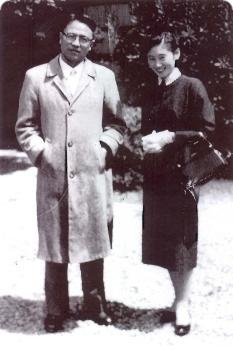
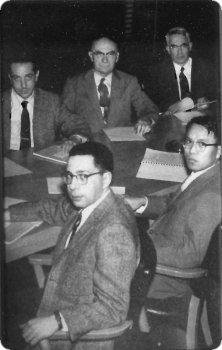
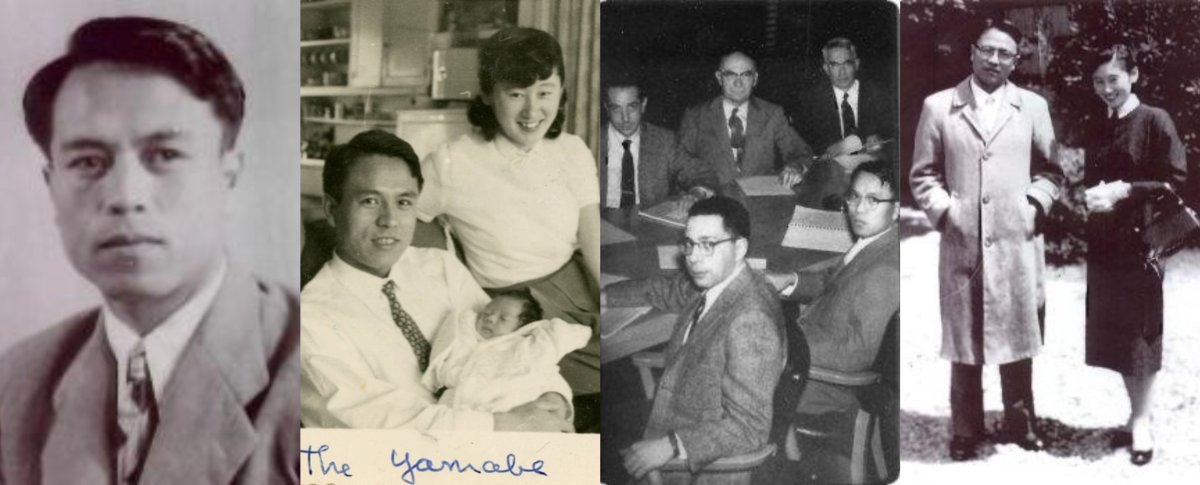
Professor Hidehiko Yamabe (1924-1960) came to Minnesota from IAS as an assistant professor in 1956. During his four years here he worked on a number of diverse topics in geometry and analysis: he initiated the problem of whether, given a Riemannian metric on a smooth compact manifold of dimension > 2, there exists a conformally equivalent metric of constant scalar curvature; he made contributions to Hilbert's 5th problem and various diffusion problems. Yamabe died in 1960, at age 37, of a massive stroke, said to have been brought on by war injuries as a civilian. This tragedy happened soon after he was appointed a full professor at Northwestern University. Yamabe's widow and two young daughters were left virtually penniless as Yamabe no longer had a pension from Minnesota and hadn't yet gained one from Northwestern. Faculty of both Northwestern and Minnesota raised a small amount of money to help the family, who then moved back to Japan.
The Yamabe Memorial Lecture was initiated jointly with Northwestern around 1962. It featured a lecture by a prominent mathematician each year, alternating between Northwestern (odd-numbered years) and Minnesota (even-numbered years). Initially supported by a small subsidy from Yamabe’s widow, this donation was later augmented by significant faculty contributions in Minnesota, resulting in the present endowment known as the Yamabe Fund. The distinguished speakers brought in year after year established the Lectures as a significant event in the mathematical calendar, particularly in the Midwest.
Notable speakers before 2002 include Neil Trudinger, Eugenio Calabi, Rick Schoen, Shizuo Kakutani, Craig Evans, Walter Rudin, Robert Hardt, Katsumi Nomizu, Fred Gehring, Richard Hamilton, Peter Sarnak, Jeff Cheeger, Shing-Tung Yau, Terence Tao, Igor Rodnianski, Luis Caffarelli, Tai-Ping Liu, Sergiu Klainerman, and Simon Brendle. In 2002, the Yamabe Memorial Lecture evolved into the Yamabe Memorial Symposium, a biannual conference featuring eight speakers over 2.5 days, supported by the Yamabe Fund and the NSF, enhancing participation and expanding its impact. Detailed information about past Yamabe Memorial Symposia can be found as follows: