Rivière-Fabes Symposium on Analysis and PDE
2026 Symposium: May 1st – 3rd

The Rivière-Fabes Symposium on Analysis and PDE will take place May 1st – 3rd on the University of Minnesota Twin Cities campus. ​

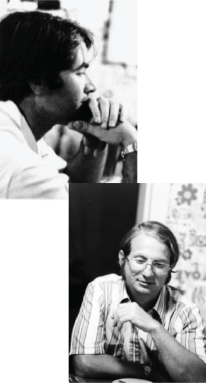
Nestor M. Rivière and Eugene B. Fabes

Speakers 

The symposium's program will consist of two hour-long lectures from the following speakers:

Financial support & application

We have funding available to partially support the travel and local expenses of graduate students and postdoctoral scholars who are interested in attending. This funding is generously provided by the National Science Foundation (NSF DMS - 2553694). Applications will be reviewed on a rolling basis; early applications are encouraged.

Apply today!

Organizers

Dmitriy Bilyk, Max Engelstein (co-chair), Hao Jia, Markus Keel (co-chair), Ru-Yu Lai, Svitlana Mayboroda, Peter Polacik, Mikhail Safonov, Daniel Spirn, and Vladimir Sverak.

Talk titles & abstracts

Expand all

Peter Hintz

Peter Hintz

Same title/abstract for both talks

Gluing small black holes along timelike geodesics

Suppose we are given a globally hyperbolic spacetime $(M,g)$ solving the Einstein vacuum equations and a timelike geodesic in $M$. I will explain how to construct, on any compact subset of $M$, a solution $g_\epsilon$ of the Einstein vacuum equations which is approximately equal to $g$ far from the geodesic but near any point along the geodesic approximately equal to the metric of a Kerr black hole with mass $\epsilon$. As an application, we can construct spacetimes which describe the merger of a very light black hole with a unit mass black hole, followed by the relaxation of the resulting single black hole to its equilibrium (Kerr or Kerr-de Sitter) state. In my lectures, I will first explain the geometric background and then discuss some of the underlying estimates for waves on families of spacetimes degenerating in this particular fashion.

Yangyang Li

Yangyang Li

Same title/abstract for both talks

How the Fredholm index detects isolated singularities of minimal submanifolds

The structure and stability of isolated singularities in minimal submanifolds are closely tied to the Fredholm index of the Jacobi operator, the linearization of the minimal surface equation. In this lecture, I will explain how this analytic perspective leads to the non-persistence of strongly isolated singularities in minimal submanifolds under generic perturbations of the ambient metric.

A key motivation comes from W.-Y. Hsiang’s classical construction of infinitely many embedded, non-equatorial minimal hyperspheres in the round four-sphere, obtained by desingularizing the Clifford football, which is the spherical suspension of a Clifford torus with two isolated conical singularities. This construction disproved the spherical Bernstein conjecture proposed by S.-S. Chern, which asserted that equatorial spheres are the only minimal hyperspheres, a statement known to hold for minimal surfaces by the works of Almgren and Calabi. Our results imply that such phenomena do not persist in a generic metric, thereby providing a negative answer to a question of A. Neves on the stability of Hsiang’s examples. This is based on joint work with Alessandro Carlotto and Zhihan Wang.

Bill Minicozzi

Bill Minicozzi

Talk 1: Optimal regularity for a degenerate elliptic PDE

The arrival time equation is a degenerate elliptic PDE that comes up in several different contexts, from game theory to geometric flows.  Around 1990, Evans and Spruck constructed Lipschitz viscosity solutions, but higher regularity was not known.  I will talk about the optimal regularity for the equation.

Talk 2: Analysis of singularities and uniqueness of blowups

The optimal regularity for the arrival time is a purely analytic problem, but the solution relies heavily on geometry.  I will explain this connection and the relevant geometric results on the analysis of geometric singularities.

Both talks will focus on joint work with Toby Colding.

Hong Wang

Hong Wang

Same title/abstract for both talks

Union of tubes and Kakeya sets

We will discuss techniques to prove volume bounds on union of tubes, with applications to the Kakeya problem in R^3. This is joint work with Josh Zahl.

Schedule

Expand all

Friday, May 1

Friday, May 1

  • 3 p.m. Vincent 120: Check in and coffee
  • 3:30 - 4:30 p.m. Vincent 16: Hong Wang (NYU/IHES)
  • 4:30 - 5 p.m. Vincent 120: Coffee Break
  • 5 - 6 p.m. Vincent 16: Yangyang Li (Notre Dame)

Saturday, May 2

Saturday, May 2

  • 8:30 a.m. Vincent 120: Light Breakfast and Coffee
  • 9 - 10 a.m. Vincent 16: Peter Hintz (Penn State)
  • 10 - 11:30 a.m. Vincent Lobby: Poster Session 1 and Coffee Break
  • 11:30 - 12:30 p.m. Vincent 16: Bill Minicozzi (MIT)
  • 12:30 - 2 p.m. Lunch Break
  • 2 - 3 p.m. Vincent 16: Yangyang Li (Notre Dame)
  • 3 - 3:30 p.m. Vincent 120: Coffee Break
  • 3:30 - 4:30 p.m. Vincent 16: Hong Wang (NYU/IHES)
  • 4:30 - 5:30 p.m. Vincent Lobby Poster Session 2
  • 6 p.m. Reception at the Campus Club — located on 4th floor of Coffman Memorial Union
     

Sunday, May 3

Sunday, May 3

  • 8:30 a.m. Vincent 120: Light Breakfast and Coffee
  • 9 - 10 a.m. Vincent 16: Bill Minicozzi (MIT)
  • 10 - 10:30 a.m. Vincent 120: Coffee break
  • 10:30 - 11:30 a.m. Vincent 16: Peter Hintz (Penn State) 

Logistics

Getting to UMN

  • The Minneapolis-Saint Paul International Airport (MSP) is conveniently located nearby Downtown Minneapolis. The airport is connected to the city center and to the UMN campus by public transport, particularly the Metro Blue Line.
  • Metro Transit is the Minneapolis / St. Paul public transportation system – it includes bus and train services that run from very early morning until late in the evening.
  • Bicycles and scooter rentals are available from Lime, Spin, and Veo.

Child care

Care.com connects visiting families with experienced local caregivers.

Explore the Twin Cities

Looking for things to do while in Minneapolis? Here are some great resources:


This Symposium was established in memory of our colleagues Nestor M. Rivière and Eugene B. Fabes.

Event history & past symposia

The symposium is supported by the Rivière-Fabes fund at the University of Minnesota and by the National Science Foundation through grant number DMS - 2553694.